Should You Rent or Buy? A Complete Financial Comparison
Skip the bumper-sticker advice. Here's how to compare renting and buying using real numbers — equity, opportunity cost, maintenance, appreciation, and the lifestyle factors that don't fit in a spreadsheet.
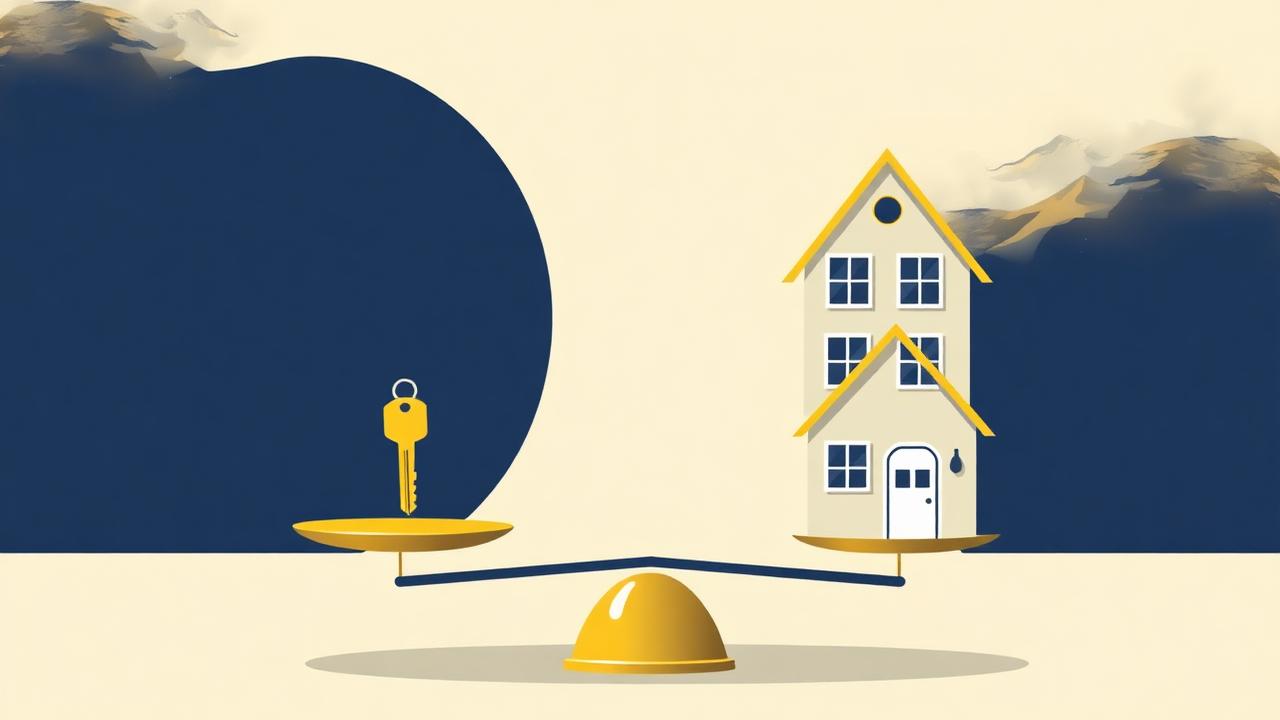
The decision isn't moral — it's mathematical
'Renting is throwing money away' and 'Buying is always a good investment' are both wrong. The honest answer depends on how long you'll stay, what else you'd do with the cash, and what your local market is actually doing.
Step 1: Compare true monthly cost, not just rent vs PI
A fair comparison includes everything:
- Renting: rent + renter's insurance + utilities (if not included)
- Buying: principal & interest + property tax + homeowners insurance + HOA + PMI + a maintenance accrual
When you add the missing line items, the gap between 'rent' and 'mortgage payment' usually shrinks by 30%–50%.
Step 2: Account for equity — but only the equity you'd keep
Buying forces savings. Part of each mortgage payment goes toward principal. But in the first five years, most of the payment is interest — you don't build meaningful equity until later.
Net equity at sale = (sale price − selling costs) − (loan balance) − (your original down payment). Selling costs alone usually run 7%–9% of sale price. A 3-year hold rarely beats renting once that's deducted.
Step 3: Don't ignore opportunity cost
The down payment isn't free money — it's capital you're not investing elsewhere. A fair rent-vs-buy model assumes the renter invests the difference (down payment plus monthly cash-flow savings) in a diversified portfolio. The buyer 'wins' only when home equity growth + tax benefits + paid-down principal outpaces what that money would have earned at, say, 6%–7%.
Step 4: Model maintenance honestly
Renters call the landlord. Owners call the plumber. Plan on 1% of home value per year for ongoing maintenance, plus reserves for capital items (roof, HVAC, water heater). It's the line item that flips spreadsheets.
Step 5: The break-even horizon
Most rigorous rent-vs-buy models show a break-even between years 4 and 7 in normal markets. Below that horizon, buying usually loses on cash basis once you include selling costs. Above it, buying usually wins — sometimes by a lot.
Rule of thumb: if you might move, change jobs, or have kids that change school districts within five years, lean rent.
Step 6: The factors that aren't on the spreadsheet
Renting buys flexibility. Owning buys stability, autonomy, and (sometimes) status. Neither shows up in a discounted cash-flow model, but both drive real human happiness. Use the math to remove obviously bad options — then make the lifestyle choice with eyes open.
Frequently asked
Is buying always better in the long run?+
Not always. In high-cost-of-living metros where price-to-rent ratios are above 25, renting and investing the difference often outperforms buying for a decade or more.
What is the price-to-rent ratio?+
Home price divided by annual rent for a comparable property. Under 15 generally favors buying; 16–20 is mixed; over 21 generally favors renting.
How much should I put down?+
Enough to avoid PMI (typically 20%) when possible, but not so much that you drain your emergency reserve. A 10%–15% down payment with strong reserves often beats 20% down and no cushion.
Do tax benefits make buying cheaper?+
Since 2018, the standard deduction is high enough that many homeowners don't itemize — meaning the mortgage interest deduction provides no real tax benefit. Don't assume it does.
The ADK Real Estate Team builds tools for realtors and the clients they serve — financial intelligence, listing performance, and the reports that win listings.
Win the listing with better reports
Net Sheet, True Payment, Wealth Report, Listing Health, and Seller Update — branded for your business.